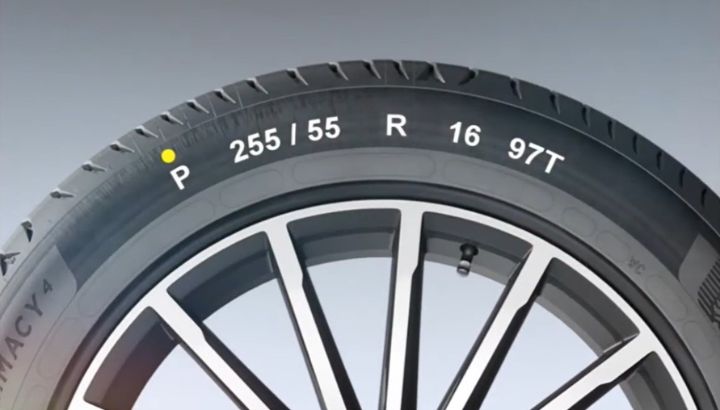
Find the sidewall code starting with “P” or “LT” (e.g., P215/65R16 95H). The first number is width in mm, the second is aspect ratio, R means radial, the next is wheel diameter, then load index and speed rating.
If you stand in front of a tire wall confused by codes like 225/55R17 94V, you are not alone.
In the next few minutes, you will learn how to decode every digit and letter on your sidewall, match it to your vehicle’s needs, and avoid buying the wrong tire size.
What Is Tire Sidewall Reading
Tire sidewall reading is the skill of decoding the alphanumeric code molded into the side of every tire to identify its size, construction, capability, and age.
The code follows a global format set by the U.S. Department of Transportation (DOT), the Tire and Rim Association (TRA), and the European ETRTO standards.
Every passenger tire sold in the US must show this information legibly per NHTSA FMVSS 119 and FMVSS 139 regulations.
The information you read tells you exactly what fits your vehicle, how much weight your tire can carry, how fast it can safely run, when it was made, and what kind of service it was designed for.
If you misread the code, you risk fitting tires that rub the fender, fail under load, or wear out prematurely.
Reading the sidewall correctly takes 30 seconds once you understand the structure, and it saves hundreds of dollars on wrong purchases.
Symptoms You Will Notice When You Have The Wrong Tire Size
If you bought tires based on guesswork instead of reading the sidewall, your vehicle will tell you within days.
The clues show up in handling, fuel economy, dashboard warnings, and visible fitment issues.
Speedometer Reading Off By 5 Percent Or More
If your speedometer reads 60 mph but GPS shows 57 or 63, your new tires have a different overall diameter than stock.
Each 3 percent change in tire diameter shifts your speedometer reading by roughly the same percent.
You should match your replacement tire’s overall diameter within 3 percent of the original to keep your speedometer, odometer, and ABS calibration accurate.
Tire Rubbing Or Fender Contact
If you hear rubbing during sharp turns or over bumps, your new tires are wider or taller than the wheel well allows.
This happens when you ignore the section width number or buy tires with a higher aspect ratio than the original.
You will also notice scrubbed paint inside the wheel arch and uneven wear on the outer shoulder of the new tires.
TPMS Or ABS Warning Lights
If your TPMS light or ABS warning comes on after fitting different size tires, the wheel speed signals confuse the system.
Indirect TPMS systems and traction control rely on consistent rotational speeds across all four wheels, so any size mismatch triggers a fault.
You can usually fix it by switching back to the correct size or having the system reprogrammed at a dealer.
Premature Or Uneven Wear
If new tires wear out in 15,000 miles instead of 50,000, you likely chose the wrong load index or speed rating for your driving.
Underrated tires run hot, lose grip in corners, and degrade rapidly under highway loads.
You confirm the issue by reading the load index and speed rating on the sidewall and comparing them to the placard on your driver door jamb.
What Each Number And Letter On Your Tire Means
Every character on your sidewall has a specific meaning. Once you map them, you read any tire on the planet in seconds.
The structure follows a fixed sequence: service type, width, aspect ratio, construction, wheel diameter, load index, and speed rating.
Service Type Letter (P, LT, ST, T)
The first letter on your tire identifies the service class.
A P means P-metric (passenger car), LT means light truck, ST means special trailer, and T means temporary spare.
If your sidewall shows no letter (just numbers like 215/55R17), you have a Euro-metric tire common on European cars.
P-metric and Euro-metric tires of the same size carry different load ratings, so you should not swap one for the other without checking your VIN or door jamb specs.
Section Width In Millimeters
The first three-digit number is your section width in millimeters, measured sidewall to sidewall when mounted on a specified rim.
A 225 means 225 mm wide, roughly 8.86 inches across.
If you fit a wider tire, you gain grip and aesthetics but you may also rub against the fender, strut, or tie rod on full lock turns.
Aspect Ratio Percentage
The two-digit number after the slash is your aspect ratio, the sidewall height as a percentage of section width.
A 65 means the sidewall is 65 percent as tall as the tire is wide. Lower numbers like 35 mean a short, sporty sidewall, while higher numbers like 75 mean tall sidewalls common on trucks.
If you change aspect ratio without keeping overall diameter constant, your speedometer will misread and your vehicle will handle differently.
Construction Letter (R, B, D)
The letter after the aspect ratio describes how your tire is built internally.
R means radial, the standard for almost every modern tire. B means bias-belted and D means diagonal bias, both rare and used on trailers or vintage applications.
If you see anything other than R on a passenger vehicle, you are probably looking at a trailer tire by mistake.
Wheel Diameter In Inches
The two-digit number after the construction letter is your rim diameter in inches, the size wheel the tire fits.
A 17 means the tire mounts on a 17-inch wheel.
If you mismatch this number, the tire will not seat on the rim at all, so this is the one number you cannot get wrong.
Load Index Number
The two- or three-digit number after the wheel diameter is your load index, a code for how much weight one tire can carry at maximum inflation.
A load index of 91 supports 1,356 lbs per tire, while 100 supports 1,764 lbs.
You should match or exceed the load index listed on your door jamb. If you go lower, your tires can fail under load, especially when carrying passengers, cargo, or towing.
Speed Rating Letter
The final letter is your speed rating, indicating the maximum sustained speed the tire is rated for.
Common ratings include S (112 mph), T (118 mph), H (130 mph), V (149 mph), W (168 mph), and Y (186 mph).
If you put an S-rated tire on a vehicle designed for V-rated tires, you compromise high speed handling and may void insurance in performance vehicle claims.
Identify Your Exact Tire Specifications
Before you buy or replace, you need to confirm what your vehicle actually requires.
If you skip this step, you risk fitting tires that fail safety, performance, or warranty standards.
Step 1: Read The Door Jamb Sticker
Open your driver door and look at the sticker on the door jamb or B-pillar.
You will see the OE tire size, the recommended cold inflation pressure (typically 30 to 35 PSI), and the load and speed rating index.
This is your factory specification and should be your default unless you have a specific upgrade reason.
Step 2: Decode The Sidewall On Your Current Tires
Walk around your vehicle and read the sidewall on each tire to confirm what is currently fitted.
Sometimes previous owners or shops install tires that differ from the door jamb, which can affect handling and warranty coverage.
If you see a mismatch between sidewall and door jamb, the door jamb is the authoritative source for replacement decisions.
Step 3: Check The DOT Date Code
Find the DOT stamp on your sidewall, followed by 11 to 12 characters ending in a four-digit date code.
The last four digits show week and year of manufacture, so 2924 means the 29th week of 2024.
If your tires are older than 6 years from this date, you should replace them regardless of tread depth, per USTMA and Michelin guidance.
Step 4: Confirm UTQG Treadwear, Traction, And Temperature
Look for the UTQG code, which lists three values: treadwear, traction, and temperature ratings.
A treadwear of 600 lasts roughly twice as long as 300. Traction grades go AA, A, B, C, with AA being the best wet stop. Temperature grades A, B, C indicate heat resistance.
If you tow heavy loads or live in a hot climate, prioritize tires with at least A temperature and A traction grades.
Know More: What Does Speed Rating Mean On Tires?
Know More: How To Reset Tire Pressure Light on Any Vehicle
Symptom To Cause To Fix Diagnostic Table
| Symptom | Likely Cause | Fix |
|---|---|---|
| Speedometer reads off | Wrong overall diameter | Match diameter within 3 percent of OE |
| Tire rubs on full lock | Tire too wide or aspect ratio too high | Drop to OE width or lower profile |
| TPMS or ABS warning | Mismatched rotational diameter | Return to OE size or reprogram system |
| Tires wear in 15,000 miles | Load or speed rating too low | Match or exceed door jamb load and speed rating |
| Vehicle handles vague | Speed rating too low for car | Upgrade to OE-spec V or W rated tires |
| Sidewall reads “DOT 0918” | Tires manufactured Sep 2018 | Replace if 6+ years old |
| Cannot mount tire | Wrong rim diameter | Buy correct wheel diameter to match rim |
| Tire pulls during cornering | Wrong service class (LT vs P) | Match P-metric or LT-metric to vehicle type |
| Rated speed lower than vehicle | Underrated speed letter | Upgrade to manufacturer-recommended rating |
| UTQG treadwear too low | Performance tire on commuter car | Switch to higher treadwear (600+) tire |
| Tire shows “Made for Spare” | T-type temporary spare | Use only for 50 miles at 50 mph max |
Step By Step Process To Read Any Tire Code
Once you understand the structure, reading any sidewall takes 30 seconds.
Follow this sequence every time and you will never get confused again.
Tools You Will Need
You need a flashlight to see clearly into the wheel arch, a damp rag to wipe road grime off the sidewall, and a notepad or your phone to record the code.
A tire pressure gauge like the JACO ElitePro or Accutire MS-4350B confirms the inflation spec. A digital caliper helps verify rim diameter when in doubt.
Step 1: Locate The Primary Size Code
Find the largest molded text on the sidewall, usually near the brand name. This is your primary size code, structured like P225/55R17 95H.
Read each section in order: service type, section width, aspect ratio, construction, wheel diameter, load index, and speed rating.
If you write each segment as you read it, you avoid skipping a value or confusing two similar numbers.
Step 2: Find The DOT Date Code
Rotate the tire or check the inner sidewall for the DOT stamp. The full code can be 10 to 12 characters long, with the last four digits being the manufacture date.
If you cannot find it on the outside sidewall, check the inside sidewall, since manufacturers are only required to mark one side.
A DOT 3722 means the tire was made in week 37 of 2022, giving you the age in service.
Step 3: Read The UTQG Triplet
Look for the letters UTQG followed by three values, often near the DOT code.
A UTQG of 600 A A means treadwear 600, traction A, temperature A.
If your tire is missing UTQG, it is either a winter tire (exempt) or a non-DOT tire that should not be on a US passenger vehicle.
Step 4: Confirm Brand And Model
Read the brand name (Michelin, Bridgestone, Goodyear, Continental, Pirelli, BFGoodrich, Hankook, Yokohama) and the model name.
Brand and model identify the specific compound and tread design, which affects wear, grip, noise, and price.
If you note brand and model, you can compare tires across retailers like Tire Rack, Discount Tire, Costco, and SimpleTire for the best price.
Step 5: Check Special Markings
Look for additional markings like M+S (mud and snow), 3PMSF (three peak mountain snowflake for severe snow), XL (extra load), or RF/RFT (run flat).
You may also see manufacturer-specific codes like MO (Mercedes original), N0 (Porsche), AO (Audi), or ★ (BMW), indicating tires designed for those automakers.
If your vehicle came with a star marking, fitting non-star tires can subtly change handling balance.
When Reading The Sidewall Will Not Be Enough
Sometimes the sidewall code does not give you the full picture. You need to consult other sources to make the right decision.
Vehicle With Plus-Sizing Or Aftermarket Wheels
If your vehicle has aftermarket wheels or plus-sized tires, the door jamb spec may not match what is actually fitted.
You should consult the wheel and tire shop or the previous owner for installation specs.
For accuracy, you can use the Tire Rack tire size calculator or 1010tires to compare overall diameters before any swap.
Vehicle With Staggered Front And Rear Sizes
Performance vehicles like BMW M3, Porsche 911, and Ford Mustang GT often run different sizes front and rear.
The door jamb lists both, so you must read both lines and order matching pairs.
If you mistakenly order four tires of the front size, the rear axle will be undersized and your vehicle handling will suffer.
EV And Hybrid Vehicles With Special Compounds
Electric vehicles like the Tesla Model 3, Tesla Model Y, and Ford Mustang Mach-E require tires with low rolling resistance and reinforced sidewalls.
Look for EV-specific tire markings or model names with “EV” in them, such as Michelin Pilot Sport EV or Bridgestone Turanza EV.
If you fit a standard tire, you lose 5 to 10 percent of your range and accelerate sidewall wear from the heavy battery.
Off-Road Or Heavy Towing Use
If you tow heavy trailers or run off-road, the sidewall code alone does not tell you the ply rating or carrying capacity in detail.
You need to read the load range letter (B, C, D, E) on truck tires, where E means 10-ply rated.
For accurate setup, consult the GVWR, GAWR, and payload capacity in your owner’s manual alongside the tire spec.
Best Tools And Reference Comparison Table
You do not always need expensive tools to read tire numbers, but the right reference makes any decision faster.
| Tool Or Resource | Use Case | Best For You If | Approx Cost |
|---|---|---|---|
| Tire Rack tire size calculator | Compare tire dimensions and fitments | You want to plus-size or compare sizes | Free online |
| 1010Tires.com size comparison | Visual diameter comparison tool | You upgrade or downsize | Free online |
| Discount Tire mobile app | Scan VIN and find correct fits | You shop at Discount Tire | Free download |
| TireMinder TM-A1A | Add-on TPMS for trailers | You tow regularly | $250 to $400 |
| JACO ElitePro digital gauge | Verify cold inflation | You drive any vehicle daily | $25 to $45 |
| Accutire MS-4350B tread gauge | Measure tread depth | You track tire wear | $10 to $15 |
| Vehicle owner’s manual | Verify OE size and load index | You own the vehicle | Free |
| NHTSA SaferCar.gov | Check for tire recalls by DOT code | You buy used tires | Free online |
| ETRTO standards manual | Reference Euro-metric specs | You import a European vehicle | $50 to $100 |
| TRA Year Book | Reference US tire and rim specs | You work in tire industry | $100 to $150 |
Pressure Gauges And Tools You Should Own
Pick up a Milton S-921 pencil gauge for backup roadside checks.
A Viair 88P portable inflator lets you correct pressure in driveways or on the road.
A Slime tire repair kit covers small puncture emergencies. A Tekton 24335 torque wrench ensures lugs go to spec when you swap wheels yourself.
Mistakes That Make Tire Reading Confusing
If you make these mistakes, you misread the code and buy the wrong product.
Avoid them and your sidewall read becomes second nature.
Confusing Section Width With Tread Width
Section width is the total sidewall-to-sidewall measurement, not the contact patch.
A 225 mm tire does not have 225 mm of tread on the road; the actual tread width is typically 80 to 90 percent of section width.
If you assume section width equals tread width, you may oversize your tire and end up with rubbing or speedometer error.
Mistaking Aspect Ratio For Sidewall Height In Inches
Aspect ratio is a percentage, not a measurement. A 55 means 55 percent of section width.
To calculate actual sidewall height, multiply section width by aspect ratio. A 225/55 has a sidewall height of 123.75 mm, or about 4.87 inches.
If you misread aspect ratio as inches, you will buy tires far too tall or too short for your vehicle.
Buying By Brand Without Checking Speed Or Load Rating
If you buy a popular tire brand without checking ratings, you risk underrating your vehicle.
A budget all-season tire from a reputable brand may still be T-rated when your vehicle requires V or H.
You should always cross-check the spec to your door jamb requirement before paying.
Ignoring The DOT Date Code On New Tires
Tires sitting in a warehouse for 2 to 3 years are sold as new but are already aged.
If you skip the DOT check, you might bring home tires that are halfway through their useful life from day one.
You should refuse any tire with a DOT date code older than 12 months unless heavily discounted and intended for short-term use.
Mixing P-Metric And LT-Metric On The Same Vehicle
Mixing service classes confuses the load and pressure logic of your suspension.
A P-metric and LT-metric tire of the same nominal size carry different loads at different pressures.
You should fit all four tires to the same service class, which is usually printed on the door jamb.
How To Prevent Tire Reading Mistakes
If you build the habit of checking specs every time, you avoid 95 percent of bad tire purchases.
The routine takes minutes and saves hundreds of dollars.
Always Photograph Your Door Jamb Sticker
Take a clear photo of your driver door jamb sticker the day you buy the vehicle.
Save the image in a phone folder labeled with your VIN. You can refer to it whenever you order tires online or at a shop.
This single habit prevents wrong-size purchases and miscommunications with installers.
Verify Online Tire Listings Match Your VIN
When you shop online at Tire Rack, Discount Tire Direct, SimpleTire, or Amazon, enter your VIN or year/make/model first.
The retailer’s database will filter results to fits that match your factory spec.
If you skip this step and order by size alone, you may end up with tires that physically fit but are mismatched in load or speed rating.
Inspect All Four Tires Annually
Once a year, walk around your vehicle and read the sidewall on each tire.
Confirm matching size, load index, speed rating, and DOT date across all four. Mark a calendar reminder for spring or fall.
If you find a mismatch, address it before it causes uneven wear, drivetrain damage, or warranty disputes.
Real Life Scenario
You drive a 2019 Toyota RAV4 and your old tires read 225/65R17 102H.
The shop offers you 225/65R17 100T tires at a discount, telling you the difference is minor.
You should refuse this swap because the load index drops from 102 (1,874 lbs) to 100 (1,764 lbs) and the speed rating drops from H (130 mph) to T (118 mph), violating your door jamb spec.
You insist on 225/65R17 102H tires from Michelin Defender 2 or Continental CrossContact LX25, paying slightly more but maintaining factory load capacity and high-speed handling.
The shop installs them, you drive away with proper specs, and your tires last the full warranty mileage of 70,000.
Total saved by reading the code correctly: hundreds in early replacement and a potential safety issue.
Frequently Asked Questions
How Do You Read The Numbers On A Tire?
You read tire numbers in a fixed sequence printed on the sidewall.
Start with the service type letter (P, LT, ST, T), then section width in millimeters, aspect ratio percentage, construction letter (R for radial), wheel diameter in inches, load index, and speed rating letter.
A code like P225/65R17 95H means a passenger tire, 225 mm wide, 65 percent aspect ratio, radial construction, fits a 17-inch rim, supports 1,521 lbs, and is rated to 130 mph.
If you read each segment in order, every tire on the planet decodes within 30 seconds.
What Does P225 65R17 Mean On A Tire?
The code P225/65R17 breaks down piece by piece.
P stands for passenger car service. 225 is the section width in millimeters from sidewall to sidewall. 65 is the aspect ratio, meaning the sidewall height is 65 percent of section width. R means the tire is built using radial construction with belts running across the tread. 17 is the wheel diameter in inches that the tire fits.
You should match all five values when replacing tires unless you intentionally upgrade with help from a fitment calculator.
How Do You Find The Tire Size For Your Car?
You find your correct tire size by checking three sources in order.
First, open your driver door and read the placard sticker on the door jamb or B-pillar, which lists the OE size and pressure spec.
Second, check your owner’s manual under maintenance specifications for confirmation.
Third, read the sidewall of any current tire on the vehicle, but only as a backup since previous owners may have changed sizes.
If all three agree, you have your factory recommendation. If they disagree, the door jamb is authoritative.
What Does The Load Index Number Mean?
The load index is a numeric code on your tire that indicates maximum weight capacity per tire at maximum inflation.
Common values include 91 (1,356 lbs), 95 (1,521 lbs), 100 (1,764 lbs), and 104 (1,985 lbs).
To calculate vehicle capacity, multiply the index value by four (assuming all four tires share the load).
You should always match or exceed the load index printed on your door jamb. If you go below, your tires can fail under load, especially when carrying passengers or towing trailers.
What Does The Speed Rating Letter Mean?
The speed rating letter at the end of your tire size code indicates the maximum sustained speed your tire can safely handle.
Common ratings include S (112 mph), T (118 mph), H (130 mph), V (149 mph), W (168 mph), Y (186 mph), and Z (149+ mph).
You should fit tires with the same speed rating as the original equipment unless your vehicle and roads do not require it.
If you fit tires with a lower rating, you risk handling instability at highway speeds and may compromise insurance coverage.
How Old Are Your Tires Based On The DOT Code?
Tire age is read from the last four digits of the DOT code molded on the sidewall.
These four digits represent the week and year of manufacture. A code 1923 means the tire was made in the 19th week of 2023.
If your code reads earlier than 6 years from today, plan replacement regardless of tread depth, since rubber compounds harden and lose grip with age.
The DOT stamp also identifies the manufacturing plant and tire size, but the date code is the most actionable piece for safety decisions.
What Is The Difference Between P-Metric And LT-Metric Tires?
P-metric tires are designed for passenger cars, minivans, and small SUVs, with sidewalls and load ratings tuned for comfortable street use.
LT-metric tires are designed for light trucks, large SUVs, and vehicles that tow or carry heavy loads, with stiffer sidewalls and higher ply ratings.
LT tires require higher inflation pressures (often 50 to 80 PSI) and carry more weight per tire than equivalent P sizes.
You should never mix P and LT tires on the same vehicle, since their load and pressure characteristics differ significantly and can cause uneven wear or handling issues.
What Does UTQG Mean On Your Tire?
UTQG stands for Uniform Tire Quality Grading, a system developed by the NHTSA to compare tire performance across brands.
The code lists three values: treadwear (a relative wear rating where higher is longer-lasting), traction (AA, A, B, C with AA being best for wet braking), and temperature (A, B, C with A being best for heat resistance).
If you commute long distances, prioritize treadwear of 600 or higher.
If you live in a hot climate or tow loads, prioritize A temperature ratings to prevent overheating.
What Are Special Markings Like M+S Or 3PMSF?
Special markings tell you about the tire’s specific capabilities beyond the size code.
M+S means mud and snow rated, designed for light winter use.
3PMSF (three peak mountain snowflake) is a more demanding rating, certifying severe snow capability under industry tests.
XL means extra load with higher capacity than standard.
RFT or run-flat means the tire can run for 50 miles at 50 mph after a puncture.
If you live in a snowy region, look for tires marked 3PMSF, since plain M+S markings do not guarantee true winter performance.
Conclusion
You should always read your tire sidewall before buying replacements, decoding service type, section width, aspect ratio, construction, wheel diameter, load index, and speed rating in that order.
If you match each value to your door jamb spec, you avoid wrong fitments, premature wear, and dashboard warnings.
If you also check the DOT date code and UTQG ratings, you confirm the tire is fresh and suited to your driving conditions.
My final expert tip for you: photograph both your door jamb sticker and the sidewall of your current tires, save them in a labeled folder on your phone, and you will never make a wrong tire purchase again.