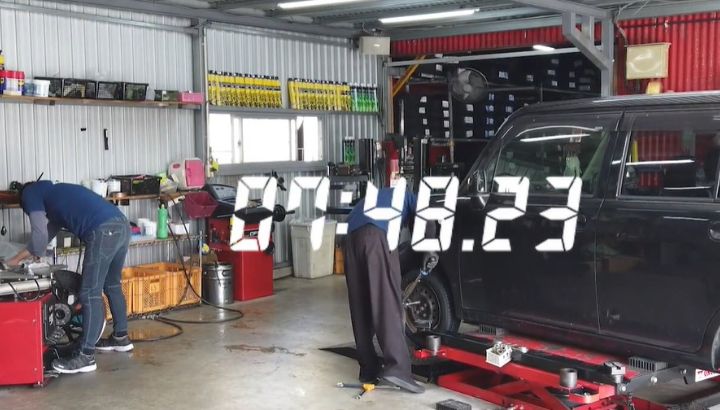
A professional shop changes four tires in 45 to 60 minutes. A DIY install with hand tools takes 1.5 to 2 hours. Add 15 minutes per wheel for alignment, balance, and TPMS reset.
You pulled into the tire shop at 10 a.m. expecting to be back on the road by lunch.
The advisor said an hour. Two hours later, you are still in the waiting room reading old magazines, and your phone is at 4 percent. The gap between what shops promise and what they deliver is real, and it has reasons. Knowing them keeps you from getting blindsided the next time you need new rubber.
What “Changing Tires” Actually Includes
Changing tires is not just unbolting old ones and bolting new ones on. The full job involves five distinct tasks: dismounting the old tires from your wheels, mounting the new tires, balancing each wheel, resetting the TPMS sensors, and torquing the lug nuts to spec.
Some shops also include a four-wheel alignment as part of the install, which adds 30 to 45 minutes to the total.
If your vehicle uses valve stems that need replacement (most do during a tire change), that adds a few minutes per wheel. Older valve cores corrode and leak air, especially after sitting in salt-belt states like Michigan, Ohio, and Pennsylvania for several winters.
The actual rubber-to-metal time per tire is roughly 8 to 12 minutes for a skilled technician using a Hunter Revolution tire changer and Hunter Road Force Elite balancer.
The rest of the time is paperwork, waiting in queue, road force balancing for premium results, and dealing with stuck or seized lug nuts.
How Long Each Tire Change Step Really Takes
If your tire job runs long, the time is hiding in specific tasks. Knowing the breakdown helps you spot when a shop is genuinely slammed versus when they are just slow.
The Lug Nut Removal Phase
Removing four wheels with an impact wrench takes a skilled technician about 5 to 8 minutes total.
If your lug nuts are seized from rust, cross-threaded from a previous botched install, or use specialty patterns like the McGard locking nuts, Spline Drive lugs, or wheel locks without a key, that time can balloon to 20 to 30 minutes per stuck wheel.
You should keep your wheel lock key in the glove box and confirm its location before any tire appointment. Losing the key adds $50 to $150 in extraction tool fees.
Dismounting Old Tires From The Rims
Pulling old tires off the rim takes about 2 to 3 minutes per wheel with modern equipment.
Older tires that have bonded to the rim in cold weather may take longer, especially in salt-belt areas where bead corrosion is heavy. Run-flat tires from Bridgestone DriveGuard, Pirelli RFT, or Continental SSR also take more time because of their stiffer sidewalls.
If you are running aftermarket alloys with sensitive finishes, the technician may use protective sleeves to avoid scratches, which adds another minute or two.
Mounting New Tires And Seating The Bead
Installing new tires takes 3 to 5 minutes per wheel for a typical passenger setup.
Beading the tire with an air burst from the rim clamp tire changer can be tricky on low-profile tires (50 series and below) and may require additional bead lubricant or even a beadlock tool.
You will see this most often on performance summer tires like the Michelin Pilot Sport 4S, Bridgestone Potenza S001, or Pirelli P Zero where sidewall stiffness fights the bead seat.
Balancing Each Wheel
Standard wheel balancing takes 5 to 7 minutes per wheel.
Road force balance, which detects defects a standard balance misses, takes 8 to 12 minutes per wheel but is worth the extra time on premium tires or vehicles sensitive to vibration.
If your wheels need significant weight (more than 4 oz total), the technician may need to spin and rebalance multiple times to fine-tune the result.
TPMS Reset And Final Torque
Resetting your TPMS adds 5 to 10 minutes depending on your vehicle make.
Most Honda, Toyota, and Ford models auto-relearn after a 10 to 20 minute drive above 25 mph. BMW, Mercedes, Audi, and Lexus require an OBD2 TPMS tool like the Autel TS508 or ATEQ VT56.
Final lug torque to manufacturer spec (80 to 100 ft-lbs for most passenger cars) using a calibrated torque wrench is the last 2 to 3 minutes of the job.
What A Long Wait Time Actually Means
If your shop appointment runs longer than expected, the cause is usually one of three things: scheduling backlog, mechanical complications, or upselling.
Shop Volume And Queue Position
Most tire shops run a queue system. If you arrive at 10 a.m. and there are two cars ahead of you, your actual install starts after both finish.
Saturday mornings, weekday lunch hours, and the days before Memorial Day, July 4th, and Labor Day are peak times. Discount Tire, Costco, Les Schwab, Walmart Auto Care, and Pep Boys all see 20 to 40 percent longer waits during these windows.
You should book a morning appointment on a Tuesday or Wednesday for the fastest turnaround.
Mechanical Surprises
A scheduled 60-minute install can stretch to 2 hours if the technician finds seized lug nuts, missing wheel locks, damaged TPMS sensors, or bent rims.
A bent rim alone can add 15 to 20 minutes per wheel because it must be checked on a runout gauge before a new tire is mounted.
These surprises are real, not made up to inflate the bill, but a good shop tells you about them within 5 minutes of opening the work order.
Upsell Conversations And Add-On Services
Shops profit from add-on services like alignments, road hazard warranties, valve stem replacements, and synthetic oil changes.
If your advisor pulls you aside to recommend additional work, that conversation takes 10 to 15 minutes itself before the actual tire work resumes.
You should know upfront which services you want and decline the rest politely. A four-wheel alignment is often worth the $80 to $150 if you are installing new tires anyway, but extended warranties on premium tires are usually optional.
Pinning Down Your Real Wait Time Before You Show Up
Before you commit to a shop appointment, run through this checklist. It saves you hours of frustration and unwanted upselling.
Step 1: Confirm The Shop’s Estimated Time
Call ahead and ask the service advisor specifically: “How long will my appointment take from the moment I arrive?”
A confident shop will say 60 to 90 minutes. A vague shop will say “depends” without giving you a window. The vague answer is a yellow flag.
You should also ask if they accept appointments or run on first-come-first-served. Costco and Discount Tire typically use scheduled appointments. Independent shops often run walk-ins, which is faster on slow days but slower on busy ones.
Step 2: Ask About Weather And Day-Of Volume
Tire shops fill up rapidly when the first cold snap hits, when the first snowfall hits, or after a major weather event causes mass tire damage.
Call the morning of your appointment and ask “How busy are you today?” If they say “slammed,” you can usually reschedule for later in the week without penalty.
This single phone call can save you 60 to 90 minutes of waiting.
Step 3: Verify Your Tire Order And TPMS Compatibility
Confirm your shop has your specific tires in stock before you drive in.
Tire size codes like 225/55R17 95H or 235/45R18 94Y must match your door jamb sticker exactly, including load index and speed rating.
If the wrong size or load rating arrives, your install gets pushed to the next day or canceled outright.
Step 4: Locate Your Wheel Lock Key And Owner’s Manual
Find your wheel lock key (usually in the glove box, trunk, or with the spare tire) before driving to the shop.
Bring your owner’s manual or have your specs handy on your phone for any TPMS programming questions.
If the shop cannot find the wheel lock key, they may charge $50 to $150 for extraction or refuse the job. This single oversight has cost drivers thousands of unnecessary dollars over the years.
Tire Change Time By Vehicle And Service Type
| Service Type | DIY With Hand Tools | Independent Shop | Big-Box Chain | Dealership |
|---|---|---|---|---|
| Single tire replacement | 30 to 45 min | 20 to 30 min | 30 to 45 min | 45 to 60 min |
| Four tire replacement | 90 to 120 min | 45 to 60 min | 60 to 90 min | 90 to 120 min |
| Tire rotation only | 30 to 45 min | 15 to 25 min | 20 to 30 min | 30 to 45 min |
| Patch repair | 30 to 45 min | 20 to 35 min | 30 to 45 min | 45 to 60 min |
| Seasonal swap (mounted) | 20 to 30 min | 15 to 25 min | 20 to 30 min | 30 to 45 min |
| Four-wheel alignment | Not DIY | 30 to 45 min | 30 to 45 min | 45 to 60 min |
| Run-flat tire change | 60 to 90 min | 45 to 60 min | 60 to 75 min | 75 to 90 min |
| Trailer tire change | 30 to 45 min | 20 to 30 min | 25 to 35 min | 35 to 45 min |
| Heavy-duty truck (LT) tires | 90 to 120 min | 60 to 90 min | 75 to 90 min | 90 to 120 min |
| AWD tire shaving | Not DIY | 60 to 90 min | 75 to 105 min | 90 to 120 min |
| Plus-sizing with new wheels | 90 to 120 min | 60 to 75 min | 75 to 90 min | 90 to 120 min |
| Specialty wheel install | 90 to 120 min | 60 to 75 min | 75 to 90 min | 90 to 120 min |
Step By Step Timing Breakdown At A Shop
If you want to understand exactly where your time goes, follow this sequence from arrival to drive-off.
Tools The Shop Uses And Why It Matters
A modern tire shop uses a Hunter Revolution rim clamp tire changer, Hunter Road Force Elite wheel balancer, Autel MaxiTPMS TS601 sensor tool, and a calibrated Stanley FATMAX torque wrench.
For high-volume shops, they may also have a Hofmann Geodyna touchless balancer, which speeds up balance time by 20 to 30 percent.
For DIY work at home, you need a hydraulic floor jack (3-ton minimum), jack stands, lug wrench or impact wrench, and a torque wrench. Add 30 minutes to any DIY job for jack setup and tear-down compared to shop time.
Arrival To Bay Entry: 10 To 30 Minutes
When you arrive, you check in at the service counter, sign the work order, and provide keys.
The advisor pulls your vehicle history and confirms tire size, brand, and any add-on services. This typically takes 5 to 10 minutes if the shop is not busy.
You then wait for a bay to open. On Tuesday at 10 a.m., that might be 5 minutes. On Saturday at 11 a.m., it might be 30 to 45 minutes before your vehicle moves into a bay.
In-Bay Tire Work: 45 To 60 Minutes
Once your vehicle is in the bay, the actual tire change runs 45 to 60 minutes for four passenger tires.
This includes wheel removal (5 to 8 min), dismount and mount (12 to 20 min), balancing (20 to 30 min), TPMS reset (5 to 10 min), and final torque (2 to 3 min).
If you ordered an alignment, add another 30 to 45 minutes on the alignment rack using a Hunter HawkEye Elite machine.
Quality Check And Test Drive: 5 To 10 Minutes
After the install, the technician test-drives your vehicle for 2 to 5 minutes to verify TPMS reset, no vibration, and no warning lights.
Some shops skip this step on busy days, which is why your TPMS sometimes lights up the moment you drive off the lot.
You should always confirm the test drive happened before paying. Ask “Did you verify TPMS is reset?” and “Did you test drive it?” before swiping your card.
Checkout And Pickup: 5 To 15 Minutes
Final paperwork, payment, and key handoff take another 5 to 15 minutes depending on shop volume.
If the advisor wants to upsell additional services (road hazard warranty, alignment package, oil change, brake inspection), this conversation can extend checkout by 10 to 20 minutes.
You should know your answers before walking up to the counter so you do not get drawn into a long pitch.
Real Life Scenario
You drive a 2019 Subaru Outback with Continental CrossContact LX25 tires that are at 3/32 inch tread. You schedule a Tuesday morning appointment at Discount Tire for 9 a.m.
You arrive at 8:55 a.m., check in (8 minutes), wait for a bay (15 minutes), have your vehicle in the bay at 9:18 a.m. The technician removes wheels (7 min), dismounts and mounts new tires (16 min), road force balances (32 min), resets TPMS (8 min), and torques to 89 ft-lbs (3 min).
You are back in the waiting room at 10:24 a.m. Final test drive takes 4 minutes. You pay and drive off at 10:35 a.m. Total time: 1 hour 40 minutes.
If you had picked up at 11:30 a.m. on Saturday, the same job would take 2 hours 30 minutes due to bay queue and walk-in traffic.
When Your Tire Change Will Take Longer Than Expected
Some situations guarantee a longer wait. Knowing them lets you plan accordingly.
Difficult Wheel And Tire Combinations
Vehicles with run-flat tires (BMW, MINI, Lexus), low-profile performance tires (Mercedes AMG, Audi RS, Porsche), or staggered front-rear setups (Ford Mustang GT, Chevy Camaro SS) take longer to change.
Each unique tire size needs separate handling, and run-flats fight the rim clamp during dismount.
You should expect 90 to 120 minutes minimum at a shop for any of these vehicles.
Aftermarket Wheels With Sensitive Finishes
If you have aftermarket alloy wheels from Volk Racing, BBS, Enkei, HRE, or Forgeline, the shop will use protective covers and slower technique to avoid scratching the finish.
This adds 5 to 10 minutes per wheel.
You should specifically tell the advisor that your wheels need protection. Most reputable shops do this automatically, but a quick mention prevents accidents.
Salt-Belt Vehicles With Seized Lug Nuts
Vehicles from Michigan, Ohio, Pennsylvania, New York, Massachusetts, Wisconsin, Minnesota, Illinois, Indiana, and other heavy-salt states often have seized lug nuts.
A seized lug can take 15 to 30 minutes to remove without damaging the wheel or stud.
You should expect a 30-minute add-on if your vehicle has been driven through salty winters for 5 plus years and has not had wheels off recently.
Dealership Service Departments
Dealerships generally take 30 to 60 percent longer than independent shops for the same tire change.
This is partly because dealerships use flat-rate scheduling that builds in extra labor time, and partly because they often combine tire jobs with other inspections.
You should expect 90 to 120 minutes for a four-tire install at a dealership, even with an appointment.
Special Order Tires Or Out-Of-Stock Sizes
If your shop has to order your tires from a regional warehouse, the install gets pushed by 1 to 3 days.
Common sizes from major brands like Michelin, Bridgestone, Goodyear, Continental, Pirelli, Hankook, Yokohama, and BFGoodrich are usually in stock at major chains.
You should call 24 hours before your appointment to confirm tires are on-site.
Habits That Burn Hours In The Tire Shop
Even with the best planning, certain mistakes turn a 60-minute job into a 3-hour ordeal.
Showing Up Without Wheel Lock Keys
This is the single biggest time waster in tire shops. If your wheel lock key is missing or hidden, the technician cannot remove the wheels.
You should locate your key before leaving home. Common storage spots: glove box, trunk well next to the spare, or the center console.
If you cannot find it, call ahead and reschedule rather than burning 30 to 60 minutes at the shop while a tech tries extraction tools.
Not Disclosing Aftermarket Or Custom Setups
If you have aftermarket wheels, lowered suspension, hub-centric rings, or custom tire fitments, tell the advisor at check-in.
Surprise discoveries mid-job add 30 to 60 minutes as the technician switches tools, sources adapters, or pauses to consult.
You should bring photos of your specific setup and any unique parts you carry in the trunk.
Booking During Peak Times
Saturdays, Sundays, the week before holidays, and the first cold week of fall all triple the average wait time.
You should book Tuesday or Wednesday morning at 8 a.m. or 9 a.m. for the fastest turnaround.
If you must go on a weekend, the first appointment slot of the day (usually 8 or 9 a.m.) gets you in and out before the rush.
Ignoring Tire Brand And Model Specifics
If you order generic “all-season tires” without specifying brand and model, the shop may install something different from what you expected.
Sorting that out at the counter takes 15 to 30 minutes of paperwork and possible reorder.
You should write down the exact brand, model, size, load index, and speed rating before you call. Example: Michelin Defender 2 225/55R17 97H.
Skipping The Pre-Visit TPMS Check
If your TPMS warning was already on before the tire change, the shop may not catch this until they finish the job.
Then they discover the actual problem (sensor battery dead, valve leak, etc.) and have to re-open the work.
You should mention any current TPMS warnings or pressure issues at check-in so the technician addresses them during the install rather than after.
Smart Habits That Save You Time On Every Tire Change
If you build these habits, your tire changes go faster and cheaper for the next decade.
Schedule Off-Peak Appointments
Tuesday and Wednesday mornings between 8 and 10 a.m. are the fastest tire shop windows.
Avoid Saturdays, Sunday afternoons, and the days before major holidays.
Book online when possible. Discount Tire, Tire Rack installer network, and Costco Tire Center all have online scheduling that locks in your spot.
Keep Your Lug Nut Tools And Wheel Locks Accessible
Store your wheel lock key in a consistent location (glove box or center console) and check it monthly.
Replace any corroded valve cores during routine maintenance to avoid surprises during tire changes.
A small bottle of anti-seize compound on wheel studs every 2 to 3 years prevents seized lug nuts and saves the next technician 15 to 20 minutes per wheel.
Maintain Pressure And Inspect Tires Monthly
Check pressure cold once a month using a digital gauge like the JACO ElitePro or Accutire MS-4021B.
Walk around the vehicle and inspect each tire for embedded objects, sidewall cracks, or DOT date.
Catching issues early prevents emergency tire changes that always take longer than scheduled appointments.
Frequently Asked Questions
How Long Does It Take To Change All Four Tires?
A professional shop changes four tires in 45 to 60 minutes with modern equipment.
The breakdown includes wheel removal (5 to 8 minutes), tire dismount and remount (12 to 20 minutes), balancing (20 to 30 minutes), TPMS reset (5 to 10 minutes), and final torque (2 to 3 minutes).
If you add a four-wheel alignment, expect another 30 to 45 minutes. DIY work at home with hand tools takes 90 to 120 minutes because of jack setup, manual labor, and lack of professional balancing equipment.
You should plan for 1 hour 30 minutes total at a busy shop and 1 hour at a quiet one for four tires plus a quick alignment check.
How Long Does It Take To Change A Single Tire?
A single tire change at a professional shop takes 20 to 30 minutes start to finish.
This includes removing the wheel (2 to 3 minutes), dismounting the old tire (2 to 3 minutes), mounting the new tire (3 to 5 minutes), balancing (5 to 7 minutes), TPMS reset (5 minutes), and final torque (1 to 2 minutes).
DIY work at home with hand tools takes 30 to 45 minutes because of jack setup, lug nut removal by hand, and the absence of professional balancing equipment.
You should still plan for 30 to 60 minutes total wait time at the shop, since the technician may take other vehicles ahead of yours in the queue.
How Long Does Tire Rotation Take?
Tire rotation at a shop takes 15 to 25 minutes total from check-in to drive-off.
The actual work takes 8 to 12 minutes: removing all four wheels (4 to 6 minutes), swapping them in the correct rotation pattern (3 to 5 minutes), and torquing back to spec (2 to 3 minutes).
DIY rotation at home with a hydraulic floor jack and torque wrench takes 30 to 45 minutes because of jack setup, manual lug removal, and proper torque sequencing.
You should rotate tires every 5,000 to 7,500 miles to even out wear. Pair rotation with engine oil changes (Castrol Edge, Mobil 1, Pennzoil Platinum) to make the schedule automatic.
How Long Does An Alignment Take?
A four-wheel alignment takes 30 to 45 minutes at a shop using a Hunter HawkEye Elite alignment rack.
The technician measures camber, caster, and toe across all four wheels (10 minutes), adjusts the suspension to bring values into spec (15 to 25 minutes), and prints before-and-after readings (5 minutes).
If your suspension components are seized or need replacement before alignment can proceed, expect another 30 to 60 minutes of additional work.
You should always get an alignment after installing new tires, hitting a major pothole, or replacing suspension parts. Cost is $80 to $150 at most shops, often bundled with tire purchase at Discount Tire and Costco.
Why Does My Tire Change Take So Long At The Dealership?
Dealerships typically take 90 to 120 minutes for a four-tire change, compared to 45 to 60 at independent shops.
The reasons include flat-rate billing that builds in extra labor time, technicians who service multiple vehicles simultaneously, mandatory multi-point inspections that add time, and longer paperwork processes.
Dealerships also charge 20 to 40 percent more than independents for the same tire and labor.
You should use the dealership only for warranty work, leased vehicles, or if you have a strong relationship with their service team. Otherwise, Discount Tire, Costco, Les Schwab, and reputable independents deliver faster service at lower cost.
Can I Wait For My Tire Change Or Should I Drop It Off?
For installations under 90 minutes, waiting is reasonable, especially at shops with comfortable lounges, free WiFi, and coffee.
For installations over 90 minutes (alignments, run-flat tires, AWD shaving, salt-belt vehicles with seized lugs), drop-off makes more sense.
Many shops offer free shuttle service within a 5-mile radius, which lets you go to a coffee shop, the office, or home while the work happens.
You should confirm the shuttle service when scheduling. Some shops offer it only on weekdays, and many cap distance at 3 to 5 miles. Plan accordingly to avoid being stuck in the lobby.
Is It Faster To Do A Tire Change Myself?
No. DIY tire changing at home is 30 to 60 minutes slower than professional shop service for a four-tire install.
You lack the rim clamp tire changer, road force balancer, TPMS programming tool, and calibrated impact tools that shops use. Manual work at home with hand tools and a hydraulic jack takes 1.5 to 2 hours for four wheels.
DIY makes sense for tire rotation, single emergency replacement using a spare, or installing pre-mounted seasonal wheels.
You should always pay a shop to mount and balance new tires, especially performance tires where balance precision matters at highway speed. The $20 to $30 per tire mounting fee is well worth the time savings and safety.
How Long Does A Seasonal Tire Swap Take?
Swapping pre-mounted seasonal wheels (winter tires already on dedicated rims, swapped onto your vehicle) takes 20 to 30 minutes at a shop.
The work includes removing the four wheels currently on your vehicle (5 to 7 minutes), installing the seasonal set (5 to 7 minutes), torquing to spec (2 to 3 minutes), and a quick check (5 minutes).
DIY swaps at home with proper tools take 30 to 45 minutes, mostly for jack setup and torquing.
You should book seasonal swaps in October (winter to all-season) and April (back to all-season) at off-peak times. Peak demand triples in November and March, when first snow and warm weather hit suddenly.
What Slows Down A Tire Change The Most?
Five issues slow down tire changes more than anything else.
First, missing wheel lock keys (adds 30 to 60 minutes for extraction). Second, seized lug nuts in salt-belt states (adds 15 to 30 minutes per wheel). Third, peak shop volume on Saturday afternoons or holiday weekends (adds 30 to 90 minutes of waiting). Fourth, run-flat tires that fight the rim clamp (adds 10 to 15 minutes per wheel). Fifth, dealerships running flat-rate billing schedules (adds 30 to 60 minutes total).
You should plan around these factors by booking off-peak, locating your wheel lock key, and choosing an experienced shop over a dealership.
Conclusion
A tire change at a professional shop runs 45 to 60 minutes for four passenger tires, 20 to 30 minutes for a single tire, and 15 to 25 minutes for a rotation.
DIY work at home takes 30 to 60 percent longer because of jack setup and the lack of professional equipment. Dealerships also run 30 to 60 percent longer than independent shops due to flat-rate scheduling.
The wait time you actually experience depends as much on your prep and timing as on the shop’s speed. Book Tuesday or Wednesday morning. Bring your wheel lock key. Know your tire size before you call. Decline the upsells you do not need.
The hour you spend waiting in a tire shop should be the hour they promised, not the afternoon they almost charge you for.