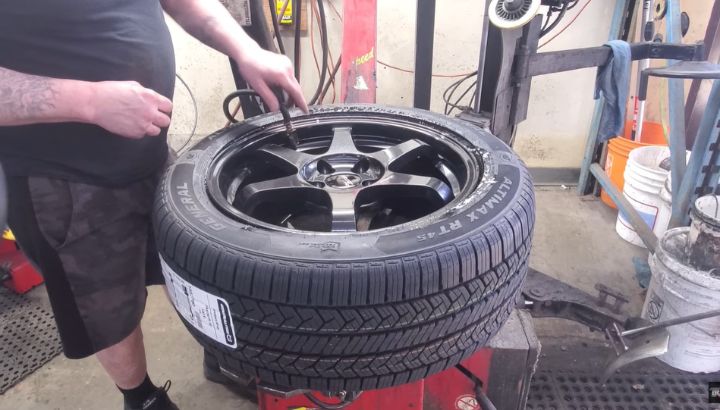
Standard wheel balancing costs $15 to $25 per tire at most shops. Road force balancing runs $25 to $40 per tire. A full four-wheel balance averages $60 to $100. Free balancing is common at Discount Tire and Costco for tire customers.
If you ask how much does it cost to balance tires, the honest answer depends on your shop, your tires, and whether the technician uses a basic spin balancer or a road force machine.
The vibration in your steering wheel at 65 mph is not random. It is a wheel begging for service, and the gap between paying twenty dollars now and replacing tires early is wider than most drivers realize. Here is what the numbers actually look like across real shops.
What Tire Balancing Means And Why It Costs Money
Tire balancing is the process of equalizing the weight distribution of a tire and wheel assembly so it rotates smoothly at highway speeds without vibration.
Every tire has minor weight inconsistencies from manufacturing. The shop technician mounts your wheel on a wheel balancer like the Hunter Road Force Elite or Hofmann Geodyna, spins it at simulated highway speed, and identifies heavy spots that cause imbalance.
Small lead or steel weights (typically 0.25 oz to 4 oz total per wheel) are clipped or stuck to the rim to counterbalance these heavy spots.
The cost reflects three things: the technician’s labor (5 to 10 minutes per wheel), the wear and depreciation on the $15,000 to $40,000 balancing machine, and the weights themselves.
When you ask how much does it cost to balance tires, you are really asking about labor, equipment time, and shop overhead. Most shops charge $15 to $25 per wheel for standard balancing and $25 to $40 per wheel for premium road force balancing.
The Warning Signs Your Wheels Need Balancing
Imbalanced wheels do not stay quiet. Your vehicle communicates the problem through specific symptoms that get worse the longer you ignore them.
Steering Wheel Vibration At Highway Speed
If your steering wheel shakes between 50 and 70 mph, your front wheels are imbalanced.
The vibration usually peaks at a specific speed (often around 60 mph) and decreases above or below that range.
You will feel it most clearly with light grip on the wheel, and it disappears when you slow down or speed up past the resonance point.
Seat Or Floor Vibration
If you feel shaking in the seat or floor pan rather than the steering wheel, your rear wheels are imbalanced.
The vibration travels up through the suspension and into the cabin, often noticeable at 55 to 70 mph.
You should not assume rear vibration is normal “road feel” on rough pavement. Smooth highways should not produce shake in a properly balanced vehicle.
Uneven Or Cupping Tire Wear
If your tires show scalloped or cupped wear patterns, your wheels have been imbalanced for thousands of miles.
The repeated bouncing motion from imbalance creates dips in the tread surface, which then make the tire even louder and rougher.
You will see this on tires that went 10,000 plus miles without balancing, especially on the front of front-wheel-drive vehicles.
Increased Road Noise
If road noise has grown progressively louder over the past few months, imbalance and the resulting cupping wear are likely contributors.
Cupped tires generate a humming or roaring sound that changes pitch with vehicle speed.
You should pair tire rotation with balancing to spread wear evenly and quiet the noise. A road force balance can detect underlying issues that standard balancing misses.
Steering Wheel Pulling Back And Forth
If your steering wheel slowly oscillates left and right at highway speed, you have severe imbalance combined with possible alignment issues.
This is more common on trucks, SUVs, and older vehicles with worn suspension.
You should address this immediately. The combination of imbalance and alignment failure causes premature wear on shocks, struts, tie rods, and ball joints.
What Causes A Wheel To Lose Its Balance
Most drivers think balancing only happens once when tires are new. The reality is that wheels lose balance for many reasons throughout their life.
Lost Wheel Weights
If a clip-on weight falls off your rim during normal driving, the wheel becomes immediately unbalanced.
You will see this on cars driven through heavy potholes, salt-belt vehicles where corrosion loosens weights, and cars cleaned with high-pressure washing that dislodges adhesive weights.
A single missing 1 oz weight is enough to create noticeable vibration at 60 mph.
Tire Wear And Tread Loss
As your tires wear, the weight distribution changes slightly across the tread.
A tire that started balanced at 30,000 miles new may be slightly imbalanced at 50,000 miles due to uneven wear, especially if rotation was skipped.
This is why most shops recommend re-balancing during rotation services every 5,000 to 7,500 miles.
Tire Replacement Or Repair
Any time a tire is removed from a rim, balance is lost. Mounting a new tire, patching a puncture, or even reseating a bead all require rebalancing.
This is why tire installation always includes balancing as part of the service, typically priced into the mounting fee or charged separately.
You should never accept new tires without balancing as part of the install.
Wheel Or Hub Damage
If you hit a major pothole or curb, your rim can be bent slightly, throwing balance off permanently until the rim is repaired or replaced.
Bent rims cannot be balanced reliably even with road force machines, since the deformation creates inconsistent runout.
You will need a runout check on the rim with a dial gauge before balancing can fix the symptom.
Brake Caliper Or Hub Issues
If a brake caliper is sticking, dragging, or the wheel hub itself has play, balancing alone will not solve the resulting vibration.
You should rule out brake and suspension issues before paying for repeated balance jobs that fail to resolve the symptom.
A diagnostic at a reputable shop using a lift and dial indicator identifies these issues quickly.
How Each Balance Method Affects Your Total Cost
The shop’s choice of balancing method directly affects what you pay. Knowing the difference saves you from overpaying or underbuying.
Static Balance: The Cheapest Option
Static balancing measures only vertical weight distribution and is the simplest, fastest method.
A static balance costs $10 to $15 per wheel at most shops, but it misses lateral imbalance that causes side-to-side vibration.
You will rarely encounter static-only balancing today because it has been replaced by dynamic balancing in modern shops. Static is mostly used on trailer wheels and motorcycle tires.
Dynamic Balance: The Standard Service
Dynamic balancing (also called spin balancing) measures both vertical and lateral weight distribution at high speed.
The wheel mounts on the Hofmann, Hunter, Coats, or Snap-On balancer and spins at simulated road speed. The machine identifies imbalance in two planes and tells the technician where to add weights.
Cost: $15 to $25 per wheel, or $60 to $100 for all four wheels. This is the default service at most independent shops, Walmart Auto Care, Pep Boys, and most chain stores.
Road Force Balance: The Premium Option
Road force balancing uses a heavy roller that simulates the load of road contact while the wheel spins.
This method detects defects that standard dynamic balancing misses: out-of-round tires, internal belt issues, hub deformation, and rim runout.
Cost: $25 to $40 per wheel, or $100 to $160 for all four. Most shops with premium customers offer this service, including Discount Tire, Costco, Les Schwab, and many independent shops.
Mounting And Balance Bundle
If you are buying new tires, balancing is usually bundled into the mounting fee.
Typical bundle pricing runs $20 to $40 per tire for mount, balance, valve stem, and tire disposal. Premium installers add $5 to $15 for road force balance.
You should ask explicitly if road force is included or available as an upgrade. The cost difference is small, and the smoother ride is worth it on luxury and performance vehicles.
Know More: How To Reset Tire Pressure Light on Any Vehicle
Know More: What Does Speed Rating Mean On Tires?
Symptom To Cause To Fix Diagnostic Table
| Symptom | Likely Cause | Fix |
|---|---|---|
| Steering wheel vibration at 60 mph | Front wheel imbalance | Standard balance or road force balance |
| Seat shaking at highway speed | Rear wheel imbalance | Balance rear wheels, check tread wear |
| Cupping on tire tread | Long-term imbalance | Replace tire if severe, rebalance the rest |
| Vibration only when braking | Warped brake rotor (not imbalance) | Resurface or replace rotor, rebalance |
| Vibration after pothole impact | Bent rim or lost weight | Inspect rim runout, replace lost weight |
| Vibration with new tires | Improper installation balance | Return to shop, request road force rebalance |
| Vibration that comes and goes | Internal tire belt issue | Road force balance to identify defect |
| Heavy weights needed (4+ oz) | Tire defect or rim damage | Inspect both, replace if needed |
| Wheel pulls back and forth | Severe imbalance + alignment issue | Balance + four-wheel alignment |
| Vibration at idle in gear | Engine mount issue (not imbalance) | Repair mount, balance not needed |
| Tire roar that grows louder | Cupping from long imbalance | Replace tire, balance new install |
| Vibration after wheel swap | Hub-centric ring missing or imbalance | Reinstall rings, rebalance wheels |
Where The Best Balancing Deals Live
If you are paying retail for balancing, you are paying too much. Smart shoppers know which shops offer the best deals or include the service free.
Discount Tire And Tire Rack: Often Free
Discount Tire offers free balancing for the life of the tire when you buy from them.
This includes annual rotation and rebalancing, valve stem service, and any flat repairs needed during ownership.
You will save $200 to $400 in lifetime balancing costs by buying from Discount Tire instead of paying per service at independents. The same applies to Tire Rack customers using their installer network.
Costco Tire Center: Free For Members
Costco offers free tire balance and rotation services for members who purchase tires from their tire centers.
The service includes road force balancing on all premium tire installations, which is rare at non-Costco shops.
You should consider a Costco membership ($65/year) before buying tires elsewhere. The free lifetime services usually pay back the membership cost within the first year of tire ownership.
Les Schwab: Free Lifetime Service
Les Schwab offers free balancing for the life of the tire on customer purchases, plus free flat repair, rotation, and air checks.
Available primarily in the western US (Oregon, Washington, Idaho, California, Nevada, Utah, Colorado).
You will pay slightly more upfront for tires at Les Schwab compared to Costco or Walmart, but the lifetime services often justify the difference.
Walmart Auto Care: Affordable But Pay-Per-Service
Walmart Auto Care charges per service: typically $15 per tire for balancing, $25 for tire rotation, and $95 to $120 for a full mount-balance-rotate package.
Walmart does not include free lifetime balancing on tire purchases.
You should compare total ownership cost (tire price plus expected balancing) before buying at Walmart. The lower upfront tire price often loses to free-lifetime alternatives.
Independent Shops: Variable Pricing
Independent tire shops charge $15 to $30 per tire for balancing, depending on location and equipment.
Shops in rural areas or smaller towns often offer the best per-service rates ($10 to $20 per tire), while urban premium shops can charge $40 plus.
You should call ahead and ask for road force balance availability and pricing. Some independent shops have premium Hunter Road Force equipment but only charge standard rates.
Dealership Service: Most Expensive
Dealerships charge $25 to $40 per wheel for balancing, with road force balancing at $40 to $60 per wheel.
Total dealership cost for four-wheel balance averages $100 to $200.
You should use the dealership only for warranty work, leased vehicles, or if you have a strong relationship with their service team. Otherwise, the price premium rarely matches the service quality difference.
Tire Balance Pricing Comparison Table
| Shop | Standard Balance | Road Force Balance | Free For Tire Customers? | Best For You If |
|---|---|---|---|---|
| Discount Tire | $15 to $20 | $25 to $35 | Yes, lifetime | You buy your tires there |
| Costco Tire Center | $15 to $20 | Included | Yes, for members | You are a Costco member |
| Les Schwab | $15 to $25 | $30 to $40 | Yes, lifetime | You live in the West Coast |
| Walmart Auto Care | $15 per tire | $25 per tire | No | You want the lowest pay-per-service |
| Pep Boys | $20 to $30 | $30 to $40 | No | You combine with other services |
| Firestone Complete Auto | $15 to $25 | $30 to $40 | No | You have a Firestone account |
| Goodyear Auto Service | $20 to $30 | $30 to $40 | No | You drive Goodyear tires |
| Independent local shop | $10 to $25 | $25 to $40 | Negotiable | You want personal service |
| Sam’s Club Tire Center | Free | Free for members | Yes, for members | You are a Sam’s Club member |
| Mavis Tire | $15 to $25 | $25 to $35 | No | You live near a Mavis location |
| BJ’s Wholesale | Free | Free for members | Yes, for members | You are a BJ’s member |
| Dealership service | $25 to $40 | $40 to $60 | Sometimes | You have an active warranty |
Tools And Supplies Worth Owning
Pick up a digital tire pressure gauge like the JACO ElitePro or Accutire MS-4021B for monthly checks.
A Viair 88P portable inflator lets you correct pressure when balance issues are paired with low PSI.
A Tekton 24335 torque wrench ensures lugs go to spec when you swap wheels yourself, and an OBD2 scanner like the BlueDriver or Innova 5610 verifies TPMS reset after any tire service.
Pinning Down Whether You Need Balance Or Something Else
Vibration is not always a balance issue. Diagnosing correctly saves you from paying for the wrong service.
Step 1: Identify Where The Vibration Happens
Drive at 40, 60, and 70 mph on a smooth road and note where the vibration peaks.
Steering wheel shake = front imbalance. Seat shake = rear imbalance. Vibration only during braking = warped rotors, not balance.
You should also note if the vibration changes with engine speed independent of road speed. If it does, you have a drivetrain issue, not a tire issue.
Step 2: Inspect Wheel Weights Visually
Walk around your vehicle and look at the inside and outside of each rim for missing or shifted wheel weights.
A clean spot where a clip-on weight used to sit is a giveaway. You will also see adhesive weights that have shifted or fallen.
If you find missing weights, schedule a balance immediately. The vibration will only get worse the longer you drive.
Step 3: Check Tire Tread For Cupping
Run your hand around each tire’s tread surface, feeling for scalloped or wavy patterns.
Cupping indicates long-term imbalance, worn shocks, or both. If cupping is severe (deep dips you can feel and see), the tire is at end of life and balancing alone will not save it.
You should plan to replace cupped tires and balance the new ones, then address suspension if the cupping returns.
Step 4: Test Drive After Service
After paying for balancing, test drive on a smooth highway at the speed where vibration was worst.
If vibration is gone, the service worked. If vibration persists, the shop needs to investigate other causes: bent rim, worn suspension, or internal belt damage in the tire.
You should not pay full price for a balance that did not solve the problem. Reputable shops will troubleshoot for free if the initial service did not work.
Step By Step Process At A Tire Shop
If you walk into a shop for balancing, here is what should happen and what you pay for.
Step 1: Initial Inspection And Quote
When you arrive, the service advisor inspects your wheels visually and asks about symptoms.
A quick test drive (2 to 5 minutes) confirms vibration speed and location. The advisor quotes the service and any add-ons (alignment, rotation, valve stem replacement).
You should request the quote in writing before any work begins. This prevents surprises at checkout.
Step 2: Wheel Removal And Inspection
The technician lifts your vehicle on a hydraulic lift, removes each wheel using an impact wrench, and inspects rims and tires for damage.
Bent rims, missing weights, and uneven tread wear are noted before balancing.
If significant issues are found, the advisor calls you before proceeding. You should approve any additional work in advance.
Step 3: Balance On The Machine
Each wheel is mounted on the Hunter Road Force Elite, Hofmann Geodyna, or similar balancer.
The machine spins the wheel at simulated highway speed (typically 60 to 70 mph), measures imbalance in two planes, and indicates exact weight placement.
The technician adds weights, re-spins, and confirms balance is within tolerance (typically ±0.25 oz).
Step 4: Reinstallation And Final Torque
Wheels are reinstalled on the vehicle and torqued to manufacturer spec using a calibrated torque wrench.
Most passenger cars require 80 to 100 ft-lbs, while trucks and SUVs may need 120 to 140 ft-lbs.
The technician test drives briefly to confirm vibration is resolved.
Step 5: Real Life Scenario
You drive a 2019 Honda Accord and feel steering wheel vibration at 65 mph that started two weeks ago.
You call Discount Tire where you bought your Continental TrueContact Tour tires last year, schedule a free lifetime rebalance, and arrive at 9 a.m. on a Tuesday.
The technician road force balances all four wheels in 35 minutes, finds a missing 1.5 oz weight on the left front rim, replaces it, and rebalances.
Total cost: $0 (free for tire customers). Total time: 50 minutes including check-in and checkout.
If you had taken this to a dealership, the same job would have run $80 to $120 and taken 1.5 to 2 hours. Buying from Discount Tire originally saved you both money and time.
What Slows Down A Balance Job Or Inflates The Price
These mistakes turn a $60 balance into a $200 ordeal. Knowing them keeps you in control.
Going To A Shop Without Confirming Equipment
Not all shops have road force balancers. Some only have basic spin balancers that miss certain defects.
If your premium tires (Michelin Pilot Sport 4S, Bridgestone Potenza S001, Pirelli P Zero) need road force, call ahead to confirm the shop has the right equipment.
You will save a wasted trip and a follow-up service that should have been done correctly the first time.
Skipping The Pre-Service Inspection
If a shop does not test drive your vehicle before quoting, they may miss the actual cause of your vibration.
A balance job on a vehicle with a bent rim or warped rotor wastes your money.
You should request a brief test drive and visual inspection before authorizing balance service. Most reputable shops do this automatically.
Accepting A Balance Without Vibration Resolution
If you pay for a balance and the vibration persists, the job was not successful.
Reputable shops will rebalance, road force, or investigate further at no additional charge.
You should not leave the lot until the vibration is gone or the shop has explained what else needs attention. A failed balance often signals a deeper issue worth diagnosing.
Buying Tires Without Lifetime Balance Included
If you buy tires from a discount source without lifetime balance service, you commit to paying $60 to $100 every 5,000 to 7,500 miles for life of the tire.
Over 60,000 miles, that adds up to $480 to $800 in balancing costs alone.
You should compare total ownership cost (tire price plus expected balance services) when shopping. Discount Tire, Costco, Les Schwab, Sam’s Club, and BJ’s all offer free lifetime balance when you buy tires from them.
Ignoring Rotation During Balance
If you balance tires without also rotating, the front tires (which wear twice as fast on FWD cars) will show new imbalance within 5,000 miles.
Pair rotation with balancing every 5,000 to 7,500 miles to spread wear evenly and maintain ride quality.
You should make this a permanent maintenance schedule. Pair it with engine oil changes (Mobil 1, Castrol Edge, Pennzoil Platinum, Shell Rotella) for an automatic reminder.
Habits That Keep Balance Costs Down Year After Year
If you build the right habits, you spend less on balancing for the rest of your driving life.
Schedule Balance With Rotation Every 5,000 To 7,500 Miles
Pair tire rotation with rebalancing to maintain smooth highway driving.
Most quick lube shops include free rotation with synthetic oil changes. Adding balance for $15 to $20 per tire keeps your wheels true.
You should mark a calendar reminder for every 5,000 miles. Skipping this maintenance shortens tire life and creates expensive replacements down the road.
Buy Tires Where Lifetime Balance Is Included
Choose retailers like Discount Tire, Costco, Les Schwab, Sam’s Club, or BJ’s that include free lifetime balance and rotation.
The total ownership cost of free-balance tires beats discount-priced tires within the first 30,000 miles in most cases.
You should treat balance services as part of the tire purchase decision, not an afterthought.
Maintain Correct Tire Pressure
Underinflation accelerates uneven wear, which causes premature imbalance.
Check pressure cold once a month and inflate to door jamb spec, accounting for the 1 PSI per 10°F temperature rule.
A correctly inflated tire wears evenly, holds its balance longer, and rarely needs emergency rebalancing between scheduled services.
Inspect Wheels After Pothole Hits
If you hit a major pothole, inspect your rims visually for bent edges, dents, or new vibration.
Catching damage early lets you address it before tire wear amplifies the imbalance.
You should plan to balance and inspect rims within a week of any major pothole impact. The $60 service may save you a $400 rim replacement.
Frequently Asked Questions
How Much Does It Cost To Balance Tires At A Shop?
How much does it cost to balance tires depends on the shop and method.
A standard four-wheel dynamic balance runs $60 to $100 at most shops. Road force balancing costs $100 to $160. Discount Tire, Costco, Les Schwab, Sam’s Club, and BJ’s offer free balancing for the life of the tire when you buy tires from them.
You should always ask if road force balance is available, especially on vehicles sensitive to vibration.
The premium service costs only $5 to $15 more per wheel and detects defects that standard balancing misses, making it worth the upgrade for daily drivers and luxury vehicles.
How Often Should Tires Be Balanced?
Most shops recommend balancing every 5,000 to 7,500 miles, paired with rotation.
You should also balance after any tire service that involves dismounting from the rim: new tire installation, patch repair, valve stem replacement, or wheel swap.
Hitting a major pothole or curb may require an immediate rebalance even if you balanced recently.
The schedule keeps tire wear even, prevents cupping, and maintains ride quality. Skipping rebalance on aging tires can shorten tire life by 15 to 25 percent and create vibration that worsens over time.
Is Tire Balancing Free At Discount Tire?
Yes. Discount Tire offers free tire balancing for the life of the tire when you buy tires from them.
This includes annual rotation, rebalancing, valve stem service, and flat repair on tires purchased through Discount Tire stores or Tire Rack’s installer network.
The free lifetime service typically saves you $200 to $400 over the life of a single tire set compared to paying per service at independent shops or dealerships.
You should keep your purchase receipt or have your phone number on file to access the lifetime service. Discount Tire technicians can pull your account from any of their locations nationwide.
What Is The Difference Between Tire Rotation And Balancing?
Tire rotation moves tires from one position to another (front to back, left to right) to even out wear.
Tire balancing equalizes weight distribution within each tire-and-wheel assembly so it spins smoothly without vibration.
Rotation typically costs $15 to $30 per service, while balancing runs $60 to $100 for all four wheels.
You should schedule both together every 5,000 to 7,500 miles for best results. Many shops bundle the services, and most quick lube shops include free rotation with synthetic oil changes. Combining them ensures your tires wear evenly and ride smoothly throughout their lifespan.
Can I Balance My Tires Myself?
Technically yes, but practically no for most drivers.
Home tire balancing requires a wheel balancer that costs $1,000 to $5,000 for entry-level static models or $15,000 to $40,000 for professional dynamic balancers.
Manual bubble balancers (around $50) only handle static balance and cannot match dynamic shop-grade results.
You should pay a shop for balancing rather than investing in equipment for occasional home use. The $15 to $25 per tire fee is far cheaper than buying and maintaining specialized machinery, and the precision difference matters at highway speeds where small imbalances cause vibration and accelerated tire wear.
How Long Does Tire Balancing Take?
A four-wheel tire balance takes 30 to 60 minutes at a busy shop.
The actual technician work is about 8 to 12 minutes per wheel, including dismount from the vehicle, balance, and remount.
Wait time at the shop adds another 15 to 30 minutes depending on volume.
You should book an appointment for off-peak times (Tuesday or Wednesday morning) for the fastest service. Walk-in service at chain shops on weekends often takes 90 minutes or more due to queue length, so calling ahead saves significant time.
Why Do My Tires Need To Be Rebalanced So Often?
Tires need rebalancing because weight distribution shifts over time as tread wears down, weights fall off, and minor damage accumulates from daily driving.
Pothole impacts, curb scrapes, and road salt corrosion all affect balance.
Cars driven primarily on rough roads or through harsh winters need more frequent balancing than cars driven on smooth highways in mild climates.
You should expect to rebalance every 5,000 to 7,500 miles paired with rotation. If you find yourself rebalancing more often, inspect for bent rims, worn suspension components, or chronic alignment issues that may be the underlying cause.
Will Bad Tires Make Balancing Useless?
Yes. If your tires have severe cupping, internal belt damage, or excessive wear, balancing alone cannot create a smooth ride.
A road force balancer can detect these defects and identify which tire is the problem, but the fix is replacement, not more weight.
You will waste money trying to balance bad tires.
You should ask your shop to road force test your wheels before authorizing balance service. If a tire is defective beyond balance, replace it and balance the new one, which delivers a properly smooth ride.
Do Run-Flat Tires Cost More To Balance?
Yes. Run-flat tires from Bridgestone DriveGuard, Pirelli RFT, Michelin Zero Pressure, and Continental SSR typically cost $5 to $10 more per wheel to balance.
The reinforced sidewalls require more force during dismount and balance, and the heavier tire structure benefits more from road force balancing.
A four-wheel run-flat balance often runs $80 to $120 at most shops, compared to $60 to $100 for standard tires.
You should expect higher costs across the life of run-flat-equipped vehicles like BMW, MINI, Lexus, and many luxury models. Buying from a shop with free lifetime balance offsets these higher per-service costs significantly.
Conclusion
How much does it cost to balance tires comes down to where you shop and what method you choose: $15 to $25 per wheel at most shops for standard balance, $25 to $40 per wheel for road force balancing, and $0 if you bought your tires from Discount Tire, Costco, Les Schwab, Sam’s Club, or BJ’s.
A four-wheel balance averages $60 to $100 at retail and runs higher at dealerships. Pair balance with rotation every 5,000 to 7,500 miles to keep tires wearing evenly and the ride staying smooth.
The drivers who pay for balance every 7,500 miles spend less over five years than the drivers who skip it and replace tires early. Vibration is not just annoying. It is the sound of money being shaken out of your wallet, one mile at a time.